 Marketing Team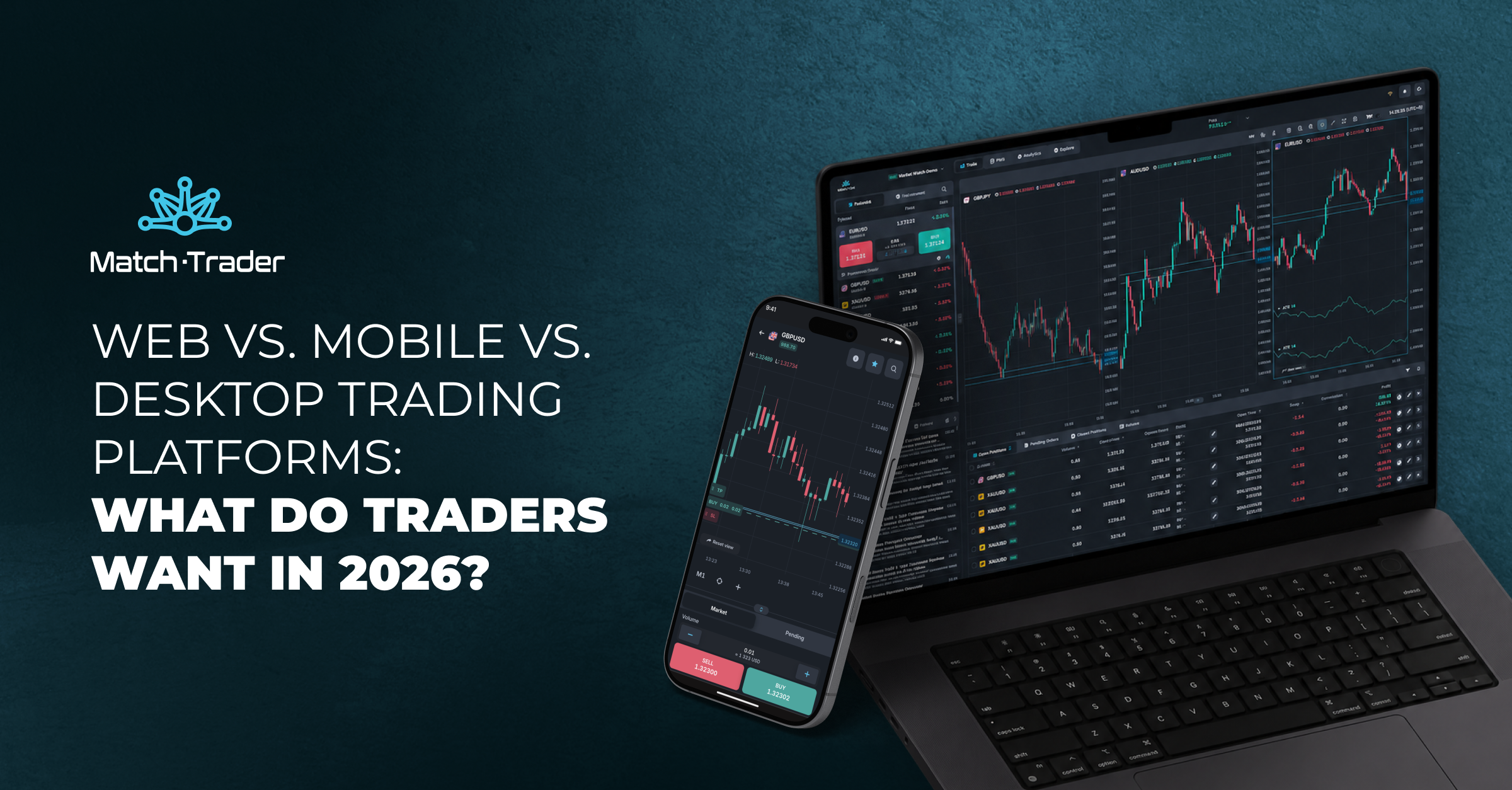
- Mobile overtook desktop as the primary trading surface for most retail segments, though desktop still anchors professional workflows.
- PWA architecture closes the gap between web and mobile, allowing brokers to ship a single build to both without a separate native app.
- Traders under 35 now expect app-quality interactions inside the browser, not clunky web terminals.
- Desktop still wins for multi-monitor analysis, algorithmic trading, and high-frequency manual execution.
- Platform choice should match how your specific trader segment actually trades, not what sounded modern two years ago.
Open any broker’s analytics, and the story tells itself. Mobile sessions have overtaken desktop for most retail segments, yet desktop still anchors the workflows of serious discretionary traders and algo operators. The web terminal, once the weakest link, now rivals native apps thanks to PWA architecture. The question for brokers in 2026 is no longer which surface matters most, but how to deliver a cohesive experience across all three.
Why Mobile Trading Took Over
Retail traders check positions between meetings, adjust stops on the train, and react to news before they reach a desk. Mobile gave them that freedom, and once they had it, they never went back. Industry data show that mobile sessions consistently outpace desktop sessions for retail FX/CFD volume in most regions.
The shift is not just about convenience, but about reaction time. A trader who can act in thirty seconds from a phone beats the same trader waiting to reach a terminal. Brokers who underinvested in mobile UX watched their active trader counts stall while competitors with polished mobile apps pulled ahead.
Where Desktop Still Wins
Desktop is not dying. It specializes. Professional traders running multi-monitor setups, algorithmic strategies, or high-frequency manual execution still prefer desktop clients for screen real estate, keyboard shortcuts, and deeper charting tools.
Prop firm traders lean toward desktops at every stage, since evaluation and funded accounts alike demand tight risk monitoring across multiple instruments, with funded rules adding per-trade caps and news-trading restrictions on top. Any platform that treats desktop as an afterthought loses credibility with the highest-value trader segments. The practical answer is parity, not picking sides.
The Web Trading Platform Comeback
Web trading once meant a stripped-down interface for clients who could not install the desktop app. That changed when PWA architecture matured. A modern web trading platform now delivers charting depth, order ticket responsiveness, and layout persistence that match native software.
Match-Trader runs its web and mobile experience on a single PWA codebase, so the same order-execution logic, charts, and UI patterns appear whether the trader opens it on a laptop or a phone. Consistency reduces support load and shortens trader onboarding time.
What PWA Brings to the Table
A progressive web app installs from the browser without the friction of an app store review cycle. Brokers ship updates to every user at once, bypassing Apple and Google approval queues that used to delay urgent fixes by days.
For the broker, PWA collapses two separate development tracks into one. You stop maintaining a native iOS app, a native Android app, and a web terminal in parallel. For the trader, the experience feels like a native app but runs in the browser with offline support, push notifications, and hardware access where available.
Matching Platform Surface to Trader Segment
The smartest brokers segment their audience before choosing which surfaces to prioritize. Retail FX and CFD audiences under 35 skew heavily mobile, so your mobile experience needs to be your strongest product, not your marketing afterthought.
Prop firm participants during evaluation phases spend hours at a desk, so desktop and web experiences carry more weight for that segment. Copy traders and social trading audiences sit somewhere in between, needing quick mobile check-ins and occasional desktop deep dives. Build the surface your traders use the most, then extend parity across the others.
How Match-Trader Handles Multi-Surface Delivery
Match-Trader’s architecture uses a single platform across web, mobile, and desktop, with a shared data model, so traders see the same positions, charts, and history on any device. TradingView front-end integration is available for FX/CFD brokers, providing traders with the charting environment they already recognize. Prop firm traders get TradingView charts embedded in the Match-Trader interface rather than a full front-end replacement.
Vendor support and onboarding matter as much as the feature set when you are choosing a multi-surface platform. A broker that ships well on mobile but struggles to migrate configurations to new trader segments ends up rebuilding what the vendor should have handled.
Ready to See the PWA Experience in Action?
If you want to evaluate how a PWA trading app feels from both the trader and the broker side, take a closer look at Match-Trader’s all-in-one trading platform. A live demo walks through the same build running in parallel on mobile, web, and desktop.
FAQ
Is Mobile Trading Safer Than Desktop Trading?
Security depends on the broker’s authentication and session controls, not the device itself. A well-built mobile app with biometric login and encrypted sessions matches or exceeds a basic desktop client. Evaluate the platform’s security model rather than defaulting to the desktop on assumption.
What Is a PWA Trading App?
A progressive web app is a browser-based application that behaves like a native app, with installability, offline support, and push notifications. For trading, it means one codebase serves web, mobile, and tablet users without separate native builds.
Do Professional Traders Still Use Desktop Platforms?
Yes, particularly for multi-monitor setups, algorithmic strategies, and high-frequency manual trading. Desktop remains the dominant surface for prop firm evaluations and discretionary professional workflows.