 Marketing Team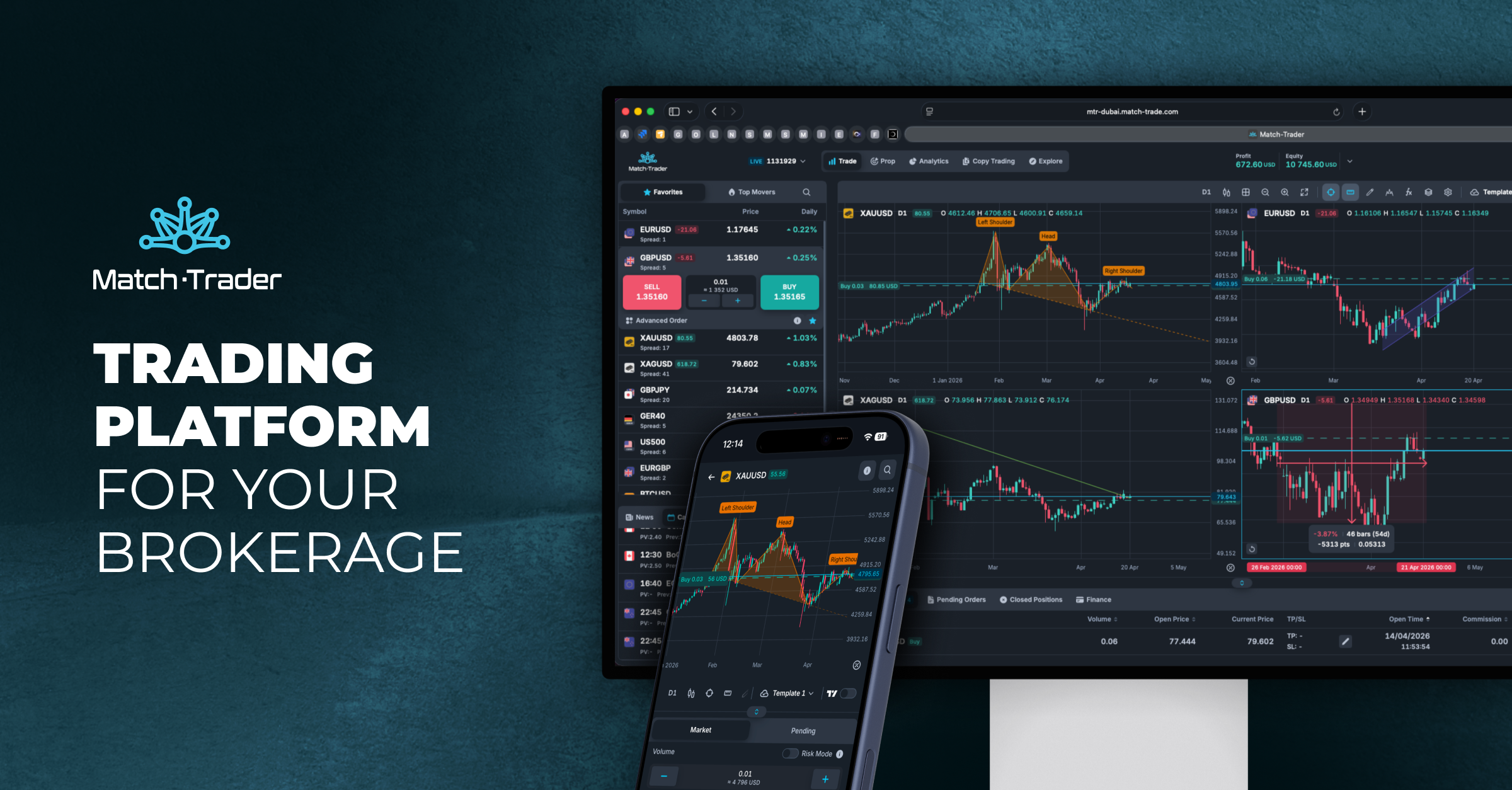
- The platform decision affects your cost structure, your traders’ experience, and your ability to scale.
- Front-end and back-end are evaluated separately; a strong interface built on an unreliable engine is a liability at any volume.
- The best trading platform for brokers handles both FX/CFD and prop trading from a single infrastructure, rather than requiring separate systems for each.
- TradingView integration is a baseline expectation in many markets.
Choosing a trading platform for your brokerage is the decision that shapes everything that follows: what your traders see, how your risk management works, what your compliance infrastructure looks like, and how much it costs to grow. Brokers who treat it as a commodity selection tend to revisit the decision at the worst possible moment.
What Brokers Should Evaluate When Choosing a Trading Platform in 2026
The legacy dominance of MetaTrader on the market has created space for alternatives that compete on price, flexibility, and ecosystem openness. Brokers launching now have more options and more complexity than at any previous point.
The decision involves three layers that are often conflated.
- Front end: what traders interact with, including charts, order types, interface design, and mobile performance.
- Back-end engine: matching speed, stability under load, API connectivity, and system behavior at 50,000 accounts versus 500.
- Surrounding ecosystem: CRM integration, bridge connectivity, payment processing, and compliance tooling.
Brokers who conflate these layers during vendor selection often end up optimizing for one at the expense of the others. A platform that scores well on one layer and poorly on another will create operational problems that no amount of front-end polish can mask.
Trading Platform Front End vs Back End: Why Both Sides Matter for Brokers
While traders judge a platform by what they see, decision-makers at brokerages need to judge it by what runs underneath. These two perspectives pull in different directions, and brokers who optimize exclusively for one tend to regret it.
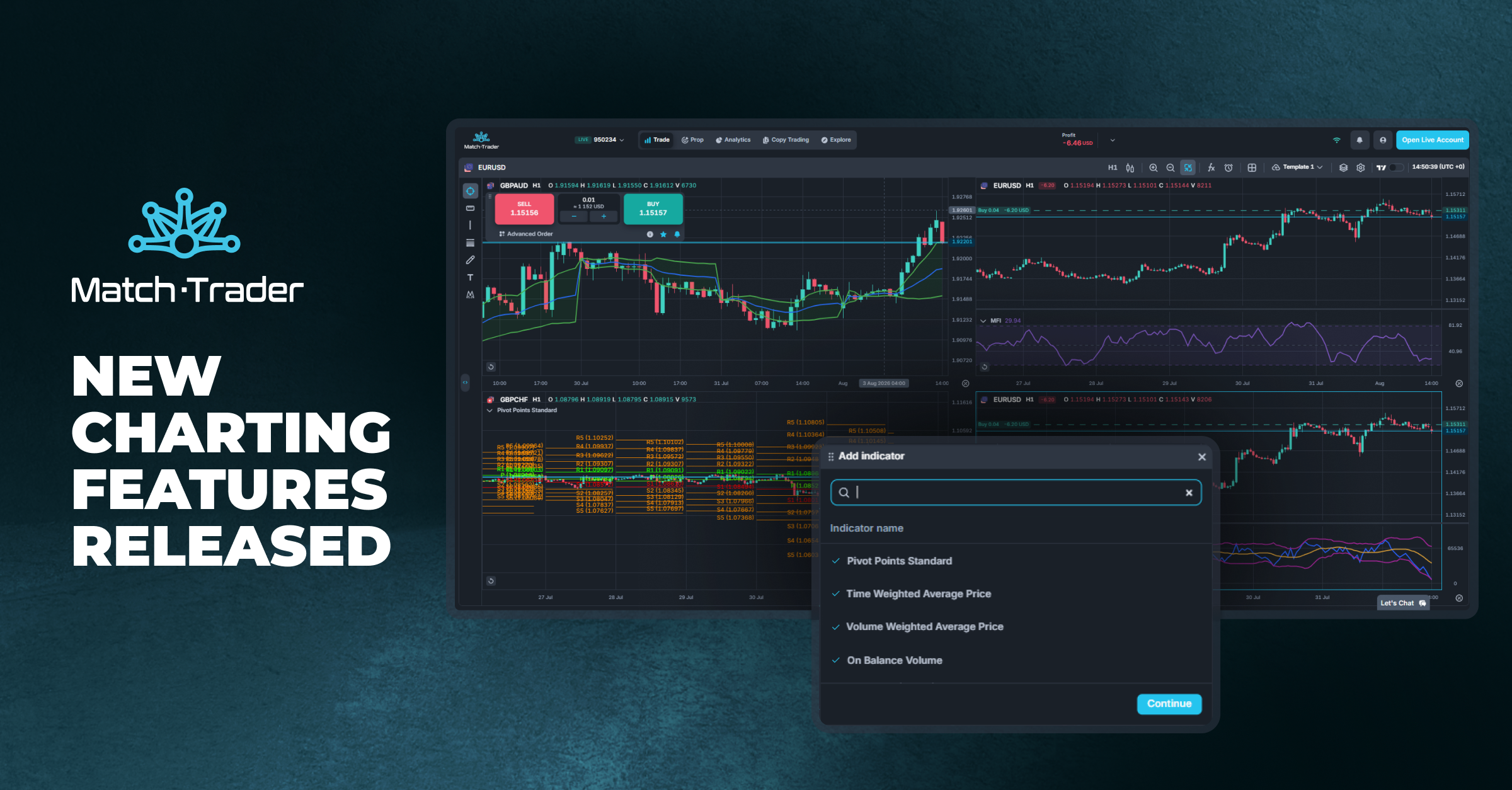
TradingView has become the charting benchmark across a large portion of the market, particularly among newer traders already accustomed to its interface. For FX/CFD brokers, Match-Trader supports full TradingView front-end integration, removing one of the most common friction points at onboarding. For prop operators, TradingView charts are available as a native feature within the Match-Trader interface, giving traders the charting environment they expect, without the full front-end replacement that applies to the FX/CFD side.
On the back-end side, stability rarely appears in sales decks but surfaces immediately under pressure. Engine reliability during periods of peak volatility, uptime during major news events, and performance at high account volumes are best verified through client references rather than vendor benchmarks.
How a Trading Platform Ecosystem Affects Broker Operations
A platform’s ecosystem is the network of tools that connect to it, including:
- CRM systems,
- bridges,
- payment processors,
- risk management tools,
- affiliate platforms.
A closed ecosystem means each new integration requires custom development or a workaround. An open ecosystem means that most of those connections are already in place.
For a broker building an operational stack from scratch, an open ecosystem reduces both cost and time-to-market. For an established broker switching platforms, it determines how much of the existing infrastructure can be carried across.
The best trading platform for brokers is rarely the one with the longest feature list; it is the one whose surrounding ecosystem fits the operational stack you are already running or planning to build.
What Switching Trading Platforms Actually Costs a Brokerage
Most brokers who switch platforms do so because they chose a platform on price alone at launch and outgrew that decision.
The visible cost of a switch includes migrating trading accounts and historical data; retraining staff across operations, compliance, and support; rebuilding CRM, bridge, and payment integrations; communicating with clients; and the reputational risk of platform instability.
The less visible cost is the period of operational disruption while the new system beds in. Choosing a platform with an open ecosystem and a clear upgrade path between licensing models reduces this risk.
Platform migrations rarely happen on schedule, and they almost never happen at a convenient time. The platform decision made at launch is rarely the last, but the quality of that first decision determines how costly the next one is. The vendor’s support infrastructure matters here as much as the technology itself: onboarding quality, response time during incidents, and access to technical account management determine how quickly problems get resolved rather than compounded.
If you are working on choosing a trading platform for your brokerage, Match-Trader offers a hybrid FX and prop infrastructure, TradingView integration, an open ecosystem, and licensing options for brokers at every stage.
Why the Best Trading Platforms for Brokers Handle FX and Prop on One Infrastructure
A broker running a traditional FX/CFD model and one running a prop trading operation have different operational requirements. Many operators assume this means separate platforms and separate vendor relationships. It does not have to.
A hybrid platform built to handle both use cases on the same back-end changes the economics.
FX/CFD brokerage requires risk management, A-Book and B-Book flow control, and liquidity bridge connectivity.
Prop trading requires challenge management tools, funded-account oversight, payout authorization, and trader performance tracking.
The alternative, running parallel platforms for FX and prop, means duplicated vendor relationships, separate integrations, and growing operational overhead. A single-platform infrastructure that handles both cuts operational costs, training time, and integration work immediately.
Match-Trader is built as a single platform that handles both use cases, with dedicated tooling for FX/CFD broker operations and prop trading management, all within the same infrastructure. More on the platform: Match-Trader for FX/CFD and Match-Trader for Prop.
Contact the Match-Trader team to discuss which setup fits your model.
FAQ
What is the most important factor when choosing a trading platform for a brokerage?
Back-end reliability is the factor most brokers underweight during selection. A platform’s performance under peak load, its API connectivity, and its stability during major market events determine day-to-day operations far more than front-end design. Verify these using client references from similar account volumes, not vendor-supplied benchmarks.
Do FX brokers and prop firms need different trading platforms?
Not necessarily. A hybrid platform built to serve both use cases from a single back end can simultaneously handle FX/CFD risk management and prop challenge infrastructure. This reduces the cost and complexity of running separate systems. The key is confirming that the platform’s prop tooling is purpose-built rather than retrofitted onto an FX-only architecture.
Is TradingView integration standard on most broker platforms in 2026?
TradingView integration is increasingly expected in markets where traders are already familiar with the charting environment, though it is not yet available across all vendor platforms. For brokers targeting markets where traders are already familiar with TradingView charting, native integration removes a significant point of friction at onboarding. It is worth confirming whether a platform’s TradingView integration is native or relies on a third-party workaround, as performance and feature parity differ between the two.